|
|
| The City of Bulawayo |
|
| Bulawayo is Zimbabwe's second largest
city. Located in the South-west of the country, it is
home to a cosmopolitan people. The Bulawayo area has
been populated since prehistoric times. The San
(Bushman) people painted their delicate
pictures in the caves of the Matobo Hills, the Rozvi
kings built a stone city at Khami and the Ndebele
nation gave the city its name. The city has wide tree
lined streets and is surrounded by beautiful parks, a
legacy of Cecil John
Rhodes. There are many places to see from a tourist
point of view. |
|
| The Museum of Natural
History |
|
|
 |
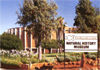
The Museum of Natural History, which
houses over 75 000 specimens, is the largest
museum in the southern hemisphere. It is the home
of the second largest mounted elephant in the
world. The displayed exhibits include wildlife,
bird, insects exhibits as well as historical and
mining displays. The Museum of Natural History is
also in the vicinity of The Centenary and Central
Parks. |
|
|
| Outskirts of Bulawayo |
|
|
|
Bulawayo Amphitheatre
|
|
Bulawayo has its own Theatre and Philharmonic Orchestra
and an Academy of Music which contains a specially
designed hall where frequent concerts and recitals are
given by overseas and local musicians. Also of note is the
Amakhosi Cultural Centre, the only one of its kind in
Southern Africa. It has an amphitheatre where performances
of traditional song, dance and drama are given regularly.
Bulawayo is the home of many dynamic and talented cultural
groups, who frequently tour overseas providing high
quality performances which are in high demand
|
|
|
 |
Bulawayo
National Art Gallery:
A branch of the National Gallery in Bulawayo, the
beautifully-restored Douslin House, a colonial
building houses a collection of traditional and
modern art, including sculpture.
On-site workshops offer handmade batiks, and there
is a shop which sells artwork, curios, sculptures
and genuine tribal artifacts. |
|
|
|
|
|
 |
Centenary
and Central Parks:
Built and laid out for the 1953 Central Africa
Centenary Exhibition, sixty years after the
founding of modern Bulawayo, the parks feature
many palm-lined walks and colourful flower
displays, a classic fountain and expanses of shady
lawns. There is also an aviary, putting course and
a miniature railway which runs at weekends. |
|
|
|
|
|
Chipangali wildlife Orphanage: it is located 23 kilometers
from the Bulawayo City Centre. Initially established as a
center for the ill and orphaned animals, the orphanage
offers a close-up view of many species of the big cats and
a wide variety of birds. In general Chipangali is a home
for orphaned, sick or abandoned wild animals. There are
lions, leopards, cheetahs, black rhinos; many species of
antelope and a large collection of birds.
|
 |
Khami Ruins: there are located 22
kilometers west of the Bulawayo City Centre, having the
status of being a Unesco World heritage Site, they
represent what used to be the capital of the Torwa
State in the 17th and 18th centuries. Khami is made up
of beautifully decorated massive granite walls connected
by a series of terraces and passages around the multiplex.
Take a virtual tour of
Khami Ruins here. The land adjoining the ruins has
been made into a Nature Reserve by the Bulawayo
City Council, called Mazwi Nature Reserve, where
the visitor may walk, drive and picnic. The Khami
trail guide is available here. |
|
|
|
|
|
|
|
 |
Matobo
National Park: located 34 Kilometers south of
Bulawayo City Centre, covering an area of 43 200
hectares, the park is positioned in the marvelous
Matobo Hills, which are constitute of a series of
domes, spires and balancing rock formations cut
out of granite solid granite plateau by mother
nature through millions and millions years of
erosion and weathering. |
King Mzilikazi gave the
district the name Matobo - 'bald heads'-,
he was buried in the Matobo Hills. Cecil John
Rhodes is buried in the Matobo National Park, at
the summit of Malindidzimu -'hill of benevolent
spirits'-. A place which he referred to as the
"view of the world." Take
a virtual tour of the Cecil John Rhodes
"world view" of Matobo National Park
|
|
Mguza Nature Reserve
This 650-hectare park is a magnet for ornithologists and
birding enthusiasts. Hundreds of different species have
been recorded in a single day. The park also contains
several wildlife species, and there are picnic spots,
picturesque walks and drives.
|
Mzilikazi Arts and Crafts Center
Situated just out of town off the Old Falls road, is
definitely worth a visit where visitors can choose from
a wide selection of skilfully crafted sculptures,
basketry, pottery, beadwork and woodwork - all done by
local people
|
 |
Old
Bulawayo: The reconstruction of the Old
Bulawayo was started in 1997. A delegation was
sent to South Africa to study similar projects at
Ondini, Bulawayo and Mgungundlovu. The
reconstruction was limited only to the Royal
Enclosure - a place where the king and his close
relatives lived. |
| A double palisade of
mopane timber have been put in place, together
with the cattle byre, which completes the
palisade. An ox-wagon shed has been refurbished
and roofed. One royal western type house, is
complete. An interpretative centre, featuring an
architectural design which blends with that of Old
Bulawayo is also complete. Take
a virtual tour of Old Bulawayo here. |
|
|
|
|
 |
Tshabalala Game Sanctuary: it is located eight kilometers
southeast of the Bulawayo City Centre. The Game
sanctuary has many lovely locations for picnics. Its
contains several walking and horseback trails.
Incidentally the Game Sanctuary is situated on the
former lands of Fairburn Usher, a British Sailor who
relocated to Bulawayo in the late 1800's, and married
one of the daughters of King Lobengula. Find out the background
of tshabalala game sanctuary here. |
|
|
|
|
|
|
The Railway Museum
|
 |
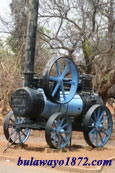
The
Railway Museum, one of the few of its kind in the
world, houses a collection of many obsolete
railway memorabilia steam locomotives, rolling
stock and station buildings - with a variety of
other exhibits dating back to 1897 when the first
steam engine rolled into the country. Bulawayo is
the country's railway junction and marshalling
yard. |
|
|
|
|
|
|
| Zimbabwe International Trade Fair |
 |
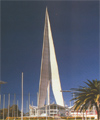
Zimbabwe's
International Trade Fair (ZITF) is also sited in
Bulawayo. This forum attracts exhibitors from the
SADC region as well as others from overseas
countries, mostly wishing to trade with Zimbabwe.
The Trade Fair also provides Zimbabwean companies
with a window to exhibit their own products to the
outside world |
|
|
|
|
|
|