History of the Khami Ruins
Khami ruins, situated near Bulawayo, is a UNESCO world heritage site that has a wealth of traditional and cultural African history. Khami ruins had similar influences as that of Great Zimbabwe, and was built when the Torwa state was at height of its powers.
A long history of occupation
The area around Khami has a long history of occupation. Stone Age hunter-gatherers lived in the area long before the stone walls belonging to the Iron Age town were built. By the end of the first millennium A.D. a village, belonging to iron and pottery using farmers, had become established on and around a rocky outcrop known as Leopard’s Kopje to the north of the river. Occasional glass beads from excavations there indicate the beginnings of trading contacts with the east coast of Africa.
Influence from Great Zimbabwe
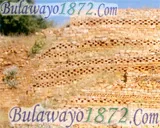
The 13th and 14th centuries saw the emergence of a powerful African state centred on Great Zimbabwe 250km to the south east. Perhaps influenced by Great Zimbabwe, the construction of stone structures began at Khami during the 15th century. At Great Zimbabwe the stone walls were used to enclose and divide up space between clay (daga) huts. At Khami the basic form of most stone structures was a raised platform on which the huts were located.
These platforms were partially or entirely constructed by the heaping of stone and gravel behind a retaining wall. Khami also has a larger number of walls with decoration than Great Zimbabwe, the most common forms being a check pattern and lines of darker dolerite stones. Despite these architectural differences, Khami clearly belongs to the same cultural tradition as Great Zimbabwe. At both sites the stone structures were associated with status and prestige while the majority of the population lived in huts outside the stone walling.
Trade with the coast and the Portuguese
Dateable imports from excavations conducted by K.R. Robinson between 1947 and 1956 indicate that trading contacts with the east coast settlements and the Portuguese continued during the 16th and 17th centuries.
The Torwa state
Historically, Khami has been identified as the capital of the Torwa state which appears to have inherited much of the power of Great Zimbabwe in southwestern Zimbabwe. The Torwa state was in turn succeeded by the Rozvi kings who became established at other important stone wall settlements including those at Naletale and Danamombe (formerly Dhlo Dhlo) near modern Gweru.

The power of the Rozvi was eventually eroded by the Nguni incursions from the south during the early 19th century culminating in the arrival of the Ndebele during the 1830s.
Visiting the site museum
It is suggested that before touring the monument a visit should be made to the site museum which contains Stone Age and Iron Age exhibits from excavations at Khami.
The hill complex and neighbouring hut platforms
Approximately takes a duration of 30-40 minutes to tour. The largest concentration of stone walling and terracing at Khami surrounds a prominent hill overlooking the Kame River. This was almost certainly the residence of the Mambo (king) although several ceremonial objects found during excavations suggest that it was also a centre of ritual in the Iron Age town. Broken pots and discarded animal bones from refuse heaps or mid-dens, litter the surrounding paths and slopes.
The complex is composed of three large hut platforms rising in tiers. Many of the retaining walls are decorated with a check pattern. The uppermost platform contains the remains of at least nine huts and is divided by two winding passages which were originally roofed with daga.
Do you know more about this? Corrections, photographs and your own account are all welcome, and a correction is published on the page with the date it was made. Send something in.