History of Lobengula, King of Matebele
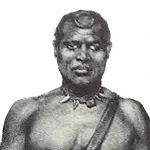
Lobengula, “He who was sick”, was the son of Mzilikazi, son of Matshobana, son of Mangete, son of Ngululu, son of Langa, son of Zimangele; all descendants of the Khumalo Dynasty. Lobengula’s mother was a Princess of the Swazi House of Sobhuza I. Lobengula ruled the Matebele Kingdom from the time of the death of Mzilikazi 1868, until the demise of the Kingdom in the Mid 1890’s.
Lobengula was in some ways lucky to have lived long enough to ascend to the throne. It is said that, Lobengula and Nkulumane along with their mothers were sentenced to death by their father, Mzilikazi. But however, Mncumbatha Khumalo felt pity for him, released him and instructed him to go and hide. Mncumbatha Khumalo returned and told the King that he had followed his (the King) directive. The King eventually found out, and had mercy on Lobengula, but he didnt want Lobengula to enter his court yard. One of the Chief was asked to take care of Lobengula, as a result Lobengula did not get first hand experience of how state affairs are run.
Who was to ascend the throne
In September 1868, King Mzilikazi of the Ndebele state died and his remains were put in a cave at Entumbane, on the northern peripheries of the Matopo Hills. After some debates, disagreement and agreements the throne was given to Lobengula.
A section of the Ndebele nation, however, was opposed to Lobengula, possibly stirred up by some instances by other members of the royal family who wished to have the crown for themselves, refused to accept any king but Nkulumane. The section argued that Lobengula was born of Swazi woman, and therefore could not ascend to the throne. It was easy to see, therefore, that there was but one way to decide the question, - a fearful battle was to be fought between the two opposing parties.
The result of the battle was that Lobengula and the warriors supporting him gained the victory, and the rebels were crushed, so much so, that they consented to Lobengula becoming king without further protests. According to Ndebele custom, a new king had to establish his own royal palace and town. Consequently, Lobengula left King Mzilkazi’s last capital of Mhlahlandlela to establish his own town, which eventually became known as Bulawayo.
Missionaries
Mzilikazi’s friendship with Robert Moffat was a most significant influence in the fate of his Kingdom after his reign. Mzilikazi had very little time for Christianity, but because of his respect for and trust of Moffat he allowed himself to be persuaded to admit the Matebele mission to his realm. Once established there he and his successor Lobengula always gave protection to the missionaries. Lobengula reigned well and entertained Europeans sparingly, one recorded account is that J.C. Chadwick. J. Cooper Chadwick in his book THREE YEARS WITH LOBENGULA (London, Cassell, 1894, 160pp) writes: “The King is by far the most intelligent man in the nation and his memory is marvelous”.
Lobengula’s sympathies and soft spot for the missionaries which he had inherited from his Father, King Mzilikazi, eventually led to the downfall of the Matebele Kingdom. Lobengula’s Kingdom, encompassed both Matebeleland and Mashonaland, but this country was rich in natural resources, which was the interest of European Settlers. Through the various concessions and treaties, Lobengula was tricked into signing over his Kingdom to the authority of Cecil John Rhodes.
The Rudd Concession
Of all the concessions, the most critical was the Rudd Concession, setting the stage for Rhodes’ British South Africa Company to mastermind the coup d’ grace in the form of the Rudd Concession. The Rudd Concession conferred sweeping commercial and legal powers on Rhodes. Furthermore to in order to weaken any possible resolve on Lobengula’s part, scouts in the Rudd party secretly agitated the neighboring Shona, who believed that the emerging problems were precipitated by the Matebele.
The war of 1893
Lobengula mounted a number of armed attempts to counter the takeover of his nation. In July 1893, the Matebele War broke out when a party of Lobengula’s warriors raided a Mashona village near Fort Victoria (now Masvingo), threatening a camp of British settlers. The British High Commissioner authorized the then present military force to respond and indeed to continue the advance until all of Matebeleland was occupied and under strict British Control.
Driven north of the Zambesi
Lobengula and a small remnant of his once powerful Impi were driven to a point approximately seventy kilometers north of the Zambesi River. Sir James McDonald, in his book RHODES – A LIFE (London: Philip Allan 1928, 403pp) describes the now very ill Lobengula’s last hours:“He felt his end was near, and calling together those faithful indunas and warriors who still remained with him, he said… go now all of you to Rhodes and seek his protection. He will be your chief and friend. To the fighting men present he said :You have done your best, my soldiers; you can help me no more. I thank you all. Go now to your kraals and Mjan (the General of all ofLobengula’s Impi) the greatest of you all, will go to Rhodes, who will make things all right for you. To all of you I say “Hambani kuhle” – go in peace!” Before twenty-four hours had elapsed, Lobengula was no more and Mjan… in due course reached Bulawayo and gave this account of his last hours.
Related pages
The fall of Lobengula, King of Matebele
Do you know more about this? Corrections, photographs and your own account are all welcome, and a correction is published on the page with the date it was made. Send something in.