History of Zimbabwe
After the decline of Great Zimbabwe, which had begun in the early fifteenth century, Shona groups later formed the Rozvi state, which under Changamire Dombo came to encompass over half of present-day Zimbabwe by the end of the seventeenth century. It lasted until the Ndebele came north in the 1830s under their king Mzilikazi and reduced it. Mzilikazi’s son Lobengula, installed as king in about 1870, later had to deal with Cecil Rhodes and the British South Africa Company (BSAC) and signed a contract giving up mineral rights to his land in exchange for guns, ammunition and money. A series of misunderstandings followed this agreement and the Ndebele found themselves fighting the BSAC. British Settlement And Administration In 1888, Cecil Rhodes obtained a concession for mineral rights from local chiefs. Later that year, the area that became Southern and Northern Rhodesia was proclaimed a British sphere of influence. The British South Africa Company was chartered in 1889, and the settlement of Salisbury (now Harare, the capital) was established in 1890.
Rhodesia
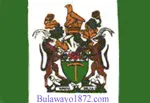
In 1895, the territory was formally named Rhodesia after Cecil Rhodes under the British South Africa Company’s administration. In the early 1890’s the losing Ndebele allied themselves with the Shona and continued a guerilla war but eventually an agreement was reached to end the fighting.
The first Chimurenga
By 1896, it was apparent to the Shona and Ndebele peoples that the Rhodesian government was not interested in their problems, thus the first Chimurenga (fight for liberation) was begun. Though this resulted in moderate success, it ended only a year later when the leaders were arrested and hanged.
The next 60 years
During the next 60 years, conflicts between blacks and whites continued. Laws were passed guaranteeing rights to whites and stripping them from blacks. Land was redistributed to whites and working conditions and wages declined.
ZANU and ZAPU
By the late 50’s two black political parties, the Zimbabwe African National Union (ZANU) and the Zimbabwe African Peoples Union (ZAPU) had sprung up but just as quickly they were banned and their leaders imprisoned.
Ian Smith and UDI
In 1964 Ian Smith became prime minister of Rhodesia, replacing Winston Field, and started pressing for independence from Britain. The British imposed strict rules before they would grant independence and they included greater equality for blacks. Since Smith knew the whites would never agree to the conditions, in 1965 he made a Unilateral Declaration of Independence (UDI). Sanctions imposed by Britain were ignored by most other western countries and the economy of Rhodesia actually improved. Conditions for blacks did not improve however and a resurgence of ZANU & ZAPU guerilla warfare began to strike deeper and deeper. Whites began abandoning their farms. This became known as the second Chimurenga.
Smith finally began to realize that something needed to be done. Negotiations between Smith and the black political parties began and broke down. Parties disagreed and fragmented. Years of negotiations continued as did white emigration.
Majority rule in two years
In 1976, Ian Douglas Smith received tremendous international pressure, which he could not ignore, causing him to reach an agreement with the political leaders which would result in majority rule in two years. This resulted in the Internal Settlement of March 3, 1978 and general elections in April 1979 under a new Constitution, which provided 75 seats for blacks and 25 seats for whites in Parliament. All residents of Rhodesia over the age of 18, regardless of race or colour, were enfranchised for this election. Bishop Muzorewa’s UANC Party won a majority of the seats reserved for blacks and Ian Smith’s Rhodesian Front party won all 25 white reserved seats. The UANC took office in June 1979, and the country was renamed Zimbabwe Rhodesia. Although the British Conservative Party, while it was still the official opposition, had said they would recognize a majority government resulting from the Internal Settlement, they reneged on this promise when they came to power. Instead, they demanded further negotiations, involving all internal and external political parties. The Lancaster House Conference took place in late 1979, at which the British Government, the UANC and the Patriotic Front (ZANU and ZAPU) agreed to participate in new elections, which commenced on 27 February 1980.
The 1980 elections
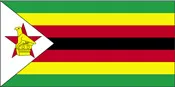
Elections took place over three days, from 27 February to 1 March 1980, under the supervision of the British Governor. ZANU Patriotic Front won a majority of seats and Robert Mugabe became Prime Minister. The country took the name Zimbabwe at independence in April 1980. In December 1987, after the Unity Accord signed with Joshua Nkomo on 22 December, the Lancaster House constitution was amended to abolish the office of Prime Minister, and Mugabe became executive President on 31 December 1987. Optimism reigned for a while but tensions soon arose.
Corruption and scandal threatened the government and rivalries and assassination attempts on government officials occurred on a regular basis. By 1996 Mugabe led government was said to be embroiled in scandals and in an attempt to retain power it unveiled the land reform program.
Land reform
Land reform in Zimbabwe had long between a topic of discussion as the minority white population owned the vast majority of farm land. The Lancaster House Agreement had stipulated that land transfers would take place with adequate compensation, but as Zimbabwe became deeper involved in helping Congo (Zaire) with their war, less money was available for compensation. In 1998 the government began seizing white owned farms and compensating owners only for improvements made to the land, such as houses, but not for the land itself. Land owners refused to move and this has resulted in some cases of violence where the homeowners were forcibly removed and murders have occurred to intimidate other landowners.
Do you know more about this? Corrections, photographs and your own account are all welcome, and a correction is published on the page with the date it was made. Send something in.